Colorado County Dog Registration Information
Service Dogs and Emotional Support Animals in Colorado, Texas
If you’re searching for how to register my dog in Colorado County, Texas, the key is understanding that a dog license in Colorado County, Texas is often handled locally—meaning by your city (if you live inside city limits) rather than by a single countywide licensing office.
This page explains how dog registration and rabies compliance typically work in Colorado County, how to find the right office for your address, and what to bring when you apply. It also clarifies the legal difference between a dog license, a service dog, and an emotional support animal (ESA).
Where to Register or License Your Dog in Colorado County, Texas
Because licensing is commonly handled at the city level, the offices below are examples of official local government points of contact within Colorado County, Texas. Start with the city where you live (or where the dog primarily resides). If you are outside city limits, contact the county to confirm which agency handles rabies enforcement or animal control questions for your area.
Example Local Offices (Official)
| Office | Address | Phone | Hours | |
|---|---|---|---|---|
| City of Columbus (City Hall) |
605 Spring Street Columbus, TX 78934 |
(979) 732-2366 | Not listed | Not listed |
| City of Eagle Lake (City Hall / Animal Control info) |
100 East Main Street Eagle Lake, TX 77434 |
(979) 234-2640 After Hours/On Call: (979) 310-3051 |
citysecretary@coeltx.net | Mon–Fri 8:00 a.m.–5:00 p.m. |
| City of Weimar (Animal Control via Weimar Police Department / City Hall) |
106 East Main Street Weimar, TX 78962 |
(979) 725-8554 Alt: (979) 725-8488 |
info@weimartx.gov | Mon–Fri 8:00 a.m.–5:00 p.m. |
| Colorado County (County Contact) | Address not listed | (979) 732-2604 | Not listed | Not listed |
Overview of Dog Licensing in Colorado County, Texas
What “dog registration” usually means
In many Texas communities, “registering” or “licensing” a dog means purchasing a city-issued registration tag or license that links your dog to your household address. This helps animal control return lost pets faster and supports enforcement of public health rules such as rabies vaccination.
City limits vs. unincorporated areas
Colorado County does not always operate a single, countywide dog licensing counter for every resident. Instead, the requirement to obtain a dog license in Colorado County, Texas may depend on whether you live:
- Inside a city: your city ordinance may require annual registration through city hall or the city department that oversees animal control.
- Outside city limits: requirements may be handled differently (and may focus on rabies compliance and leash/at-large enforcement rather than a city tag).
Rabies vaccination is the baseline requirement
Even when licensing rules vary, rabies control is treated as a serious public health issue. Most local registration processes require proof of current rabies vaccination from a veterinarian. If you are applying for a city registration tag, expect to attach or present your rabies vaccination certificate.
How Dog Licensing Works Locally in Colorado County, Texas
Step 1: Confirm your jurisdiction (your “right” office)
The fastest way to avoid delays is to confirm whether your address is inside a city’s boundaries. If your home is within Columbus, Eagle Lake, Weimar, or another incorporated area of Colorado County, start with that city’s registration process. This is usually the correct path for an animal control dog license Colorado County, Texas question because the city’s animal control program typically enforces the city ordinance.
Step 2: Gather the standard documents
While each office may have its own form and fee schedule, local dog registration commonly asks for:
- Proof of rabies vaccination (rabies certificate from a licensed veterinarian)
- Owner identification (a government-issued photo ID is commonly requested)
- Proof of residency (especially if a city license is only for residents inside city limits)
- Licensing fee (often a small annual fee per pet, paid to the city)
Step 3: Submit the application and keep tags current
If your city issues a registration tag, it’s typically meant to be attached to your dog’s collar or harness. Renewal is commonly annual. If your dog’s rabies vaccination expires, many jurisdictions require you to update your records (and your city may require proof of renewed vaccination to keep registration valid).
Examples of local rules you may see
- Some cities require registration for dogs over a certain age (for example, four months) and may set penalties for failing to register.
- Some cities issue a metal tag and may require it to be worn by the dog.
- Some cities set deadlines for annual renewal and may set maximum fines for noncompliance.
If you adopted recently or moved to Colorado County
If you recently moved, adopted, or received a dog from a family member, update your dog’s information promptly with the appropriate local office. A current license and rabies certificate can reduce delays if your dog is found running at large and taken in by animal control.
Service Dog Laws in Colorado County, Texas
A dog license is not the same as service dog status
A city or local dog license (registration tag) is an animal control/public health tool. It does not determine whether a dog is a service animal. Service dog status is based on disability law and the dog’s training to perform tasks for a person with a disability.
What generally qualifies as a service dog
In general terms, a service dog is trained to do specific work or perform tasks directly related to a person’s disability (for example, guiding a person who is blind, alerting to seizures, or retrieving items during mobility limitations). Service dogs are typically permitted to accompany their handler in public places where pets are not allowed, as long as the dog is under control and housebroken.
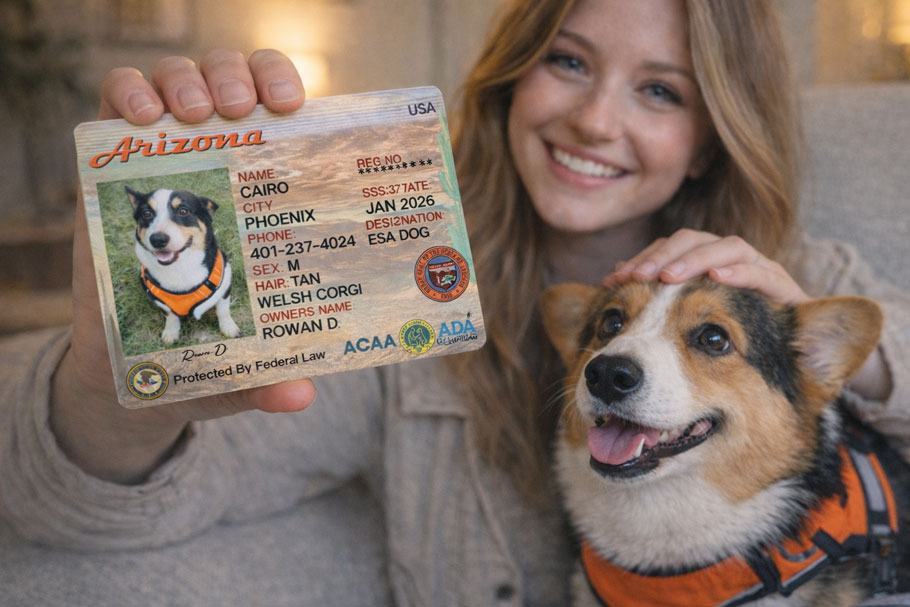
Registration papers or “certificates” are usually not required by law
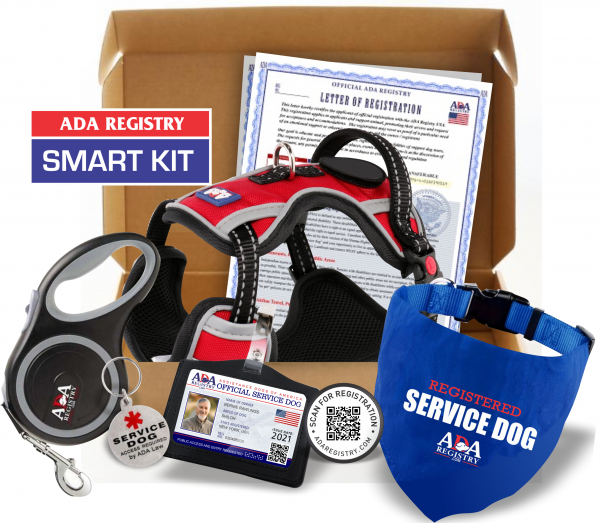
Be cautious about confusing private “registrations” with legal rights. Service dog access rights generally do not come from buying a certificate online. Your local dog license remains a separate requirement where your city requires it, and service dogs may still need to comply with local public health rules like rabies vaccination.
Emotional Support Animal Rules in Colorado County, Texas
ESAs are different from service dogs
Emotional support animals (ESAs) provide comfort by their presence, but they are not the same as service animals trained to perform disability-related tasks. Because of this distinction, ESAs generally do not have the same public-access rights as service dogs in places like restaurants, grocery stores, or other public businesses.
ESAs and local licensing
Even if your dog is an ESA, local rules can still apply. If your city requires registration, an ESA may still need a city-issued tag and must still meet rabies vaccination requirements. Put simply: ESA status does not replace a dog license in Colorado County, Texas when your city requires licensing.
Housing rules are separate from licensing rules
Some ESA-related rights are commonly discussed in the housing context, but those rules are separate from municipal animal control rules. If you’re renting, you may need to address both: (1) your housing provider’s process and (2) the city’s registration/rabies process (if you live in an incorporated area that requires it).
Frequently Asked Questions
Register A Dog In Other Texas Counties
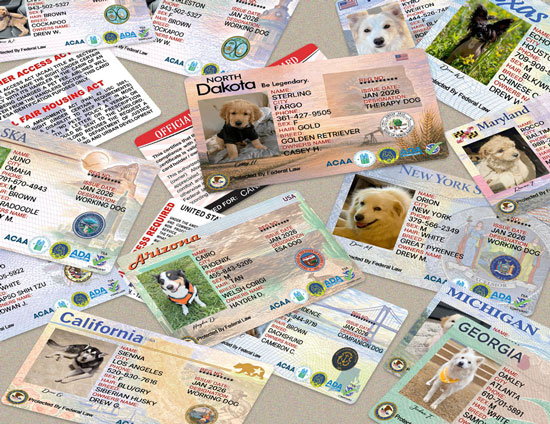
Select your county below to get started with your dog’s ID card. Requirements and license designs may vary by county, so choose your location to see the correct options and complete your pup’s registration.
- Anderson County Dog Registration
- Andrews County Dog Registration
- Angelina County Dog Registration
- Aransas County Dog Registration
- Archer County Dog Registration
- Armstrong County Dog Registration
- Atascosa County Dog Registration
- Bailey County Dog Registration
- Bandera County Dog Registration
- Bastrop County Dog Registration
- Baylor County Dog Registration
- Bee County Dog Registration
- Bell County Dog Registration
- Bexar County Dog Registration
- Blanco County Dog Registration
- Borden County Dog Registration
- Bosque County Dog Registration
- Bowie County Dog Registration
- Brazoria County Dog Registration
- Brazos County Dog Registration
- Brewster County Dog Registration
- Briscoe County Dog Registration
- Brooks County Dog Registration
- Brown County Dog Registration
- Burleson County Dog Registration
- Burnet County Dog Registration
- Caldwell County Dog Registration
- Calhoun County Dog Registration
- Callahan County Dog Registration
- Cameron County Dog Registration
- Camp County Dog Registration
- Carson County Dog Registration
- Cass County Dog Registration
- Castro County Dog Registration
- Chambers County Dog Registration
- Cherokee County Dog Registration
- Childress County Dog Registration
- Clay County Dog Registration
- Cochran County Dog Registration
- Coke County Dog Registration
- Coleman County Dog Registration
- Collin County Dog Registration
- Collingsworth County Dog Registration
- Comal County Dog Registration
- Comanche County Dog Registration
- Concho County Dog Registration
- Cooke County Dog Registration
- Coryell County Dog Registration
- Cottle County Dog Registration
- Crane County Dog Registration
- Crockett County Dog Registration
- Crosby County Dog Registration
- Culberson County Dog Registration
- Dallam County Dog Registration
- Dawson County Dog Registration
- Deaf Smith County Dog Registration
- Delta County Dog Registration
- Denton County Dog Registration
- DeWitt County Dog Registration
- Dickens County Dog Registration
- Dimmit County Dog Registration
- Donley County Dog Registration
- Duval County Dog Registration
- Eastland County Dog Registration
- Ector County Dog Registration
- Edwards County Dog Registration
- Ellis County Dog Registration
- Erath County Dog Registration
- Falls County Dog Registration
- Fannin County Dog Registration
- Fayette County Dog Registration
- Fisher County Dog Registration
- Floyd County Dog Registration
- Foard County Dog Registration
- Fort Bend County Dog Registration
- Franklin County Dog Registration
- Freestone County Dog Registration
- Frio County Dog Registration
- Gaines County Dog Registration
- Galveston County Dog Registration
- Garza County Dog Registration
- Gillespie County Dog Registration
- Glasscock County Dog Registration
- Goliad County Dog Registration
- Gonzales County Dog Registration
- Gray County Dog Registration
- Grayson County Dog Registration
- Gregg County Dog Registration
- Grimes County Dog Registration
- Guadalupe County Dog Registration
- Hale County Dog Registration
- Hall County Dog Registration
- Hamilton County Dog Registration
- Hansford County Dog Registration
- Hardeman County Dog Registration
- Hardin County Dog Registration
- Harris County Dog Registration
- Harrison County Dog Registration
- Hartley County Dog Registration
- Haskell County Dog Registration
- Hays County Dog Registration
- Hemphill County Dog Registration
- Henderson County Dog Registration
- Hidalgo County Dog Registration
- Hill County Dog Registration
- Hockley County Dog Registration
- Hood County Dog Registration
- Hopkins County Dog Registration
- Howard County Dog Registration
- Hudspeth County Dog Registration
- Hunt County Dog Registration
- Hutchinson County Dog Registration
- Irion County Dog Registration
- Jack County Dog Registration
- Jackson County Dog Registration
- Jasper County Dog Registration
- Jeff Davis County Dog Registration
- Jefferson County Dog Registration
- Jim Hogg County Dog Registration
- Jim Wells County Dog Registration
- Johnson County Dog Registration
- Jones County Dog Registration
- Karnes County Dog Registration
- Kaufman County Dog Registration
- Kendall County Dog Registration
- Kenedy County Dog Registration
- Kent County Dog Registration
- Kerr County Dog Registration
- Kimble County Dog Registration
- King County Dog Registration
- Kinney County Dog Registration
- Kleberg County Dog Registration
- Knox County Dog Registration
- Lamar County Dog Registration
- Lamb County Dog Registration
- Lampasas County Dog Registration
- LaSalle County Dog Registration
- Lavaca County Dog Registration
- Lee County Dog Registration
- Leon County Dog Registration
- Liberty County Dog Registration
- Limestone County Dog Registration
- Lipscomb County Dog Registration
- Live Oak County Dog Registration
- Llano County Dog Registration
- Loving County Dog Registration
- Lynn County Dog Registration
- Madison County Dog Registration
- Marion County Dog Registration
- Martin County Dog Registration
- Mason County Dog Registration
- Matagorda County Dog Registration
- Maverick County Dog Registration
- McCulloch County Dog Registration
- McLennan County Dog Registration
- McMullen County Dog Registration
- Medina County Dog Registration
- Menard County Dog Registration
- Midland County Dog Registration
- Milam County Dog Registration
- Mills County Dog Registration
- Mitchell County Dog Registration
- Montague County Dog Registration
- Montgomery County Dog Registration
- Moore County Dog Registration
- Morris County Dog Registration
- Motley County Dog Registration
- Nacogdoches County Dog Registration
- Navarro County Dog Registration
- Newton County Dog Registration
- Nolan County Dog Registration
- Nueces County Dog Registration
- Ochiltree County Dog Registration
- Oldham County Dog Registration
- Orange County Dog Registration
- Palo Pinto County Dog Registration
- Panola County Dog Registration
- Parker County Dog Registration
- Parmer County Dog Registration
- Pecos County Dog Registration
- Polk County Dog Registration
- Potter County Dog Registration
- Presidio County Dog Registration
- Rains County Dog Registration
- Randall County Dog Registration
- Reagan County Dog Registration
- Real County Dog Registration
- Red River County Dog Registration
- Reeves County Dog Registration
- Refugio County Dog Registration
- Roberts County Dog Registration
- Robertson County Dog Registration
- Rockwall County Dog Registration
- Runnels County Dog Registration
- Rusk County Dog Registration
- Sabine County Dog Registration
- San Augustine County Dog Registration
- San Jacinto County Dog Registration
- San Patricio County Dog Registration
- San Saba County Dog Registration
- Schleicher County Dog Registration
- Scurry County Dog Registration
- Shackelford County Dog Registration
- Shelby County Dog Registration
- Sherman County Dog Registration
- Smith County Dog Registration
- Somervell County Dog Registration
- Starr County Dog Registration
- Stephens County Dog Registration
- Sterling County Dog Registration
- Stonewall County Dog Registration
- Sutton County Dog Registration
- Swisher County Dog Registration
- Tarrant County Dog Registration
- Taylor County Dog Registration
- Terrell County Dog Registration
- Terry County Dog Registration
- Throckmorton County Dog Registration
- Titus County Dog Registration
- Tom Green County Dog Registration
- Travis County Dog Registration
- Trinity County Dog Registration
- Tyler County Dog Registration
- Upshur County Dog Registration
- Upton County Dog Registration
- Uvalde County Dog Registration
- Val Verde County Dog Registration
- Van Zandt County Dog Registration
- Victoria County Dog Registration
- Walker County Dog Registration
- Waller County Dog Registration
- Ward County Dog Registration
- Washington County Dog Registration
- Webb County Dog Registration
- Wharton County Dog Registration
- Wheeler County Dog Registration
- Wichita County Dog Registration
- Wilbarger County Dog Registration
- Willacy County Dog Registration
- Williamson County Dog Registration
- Wilson County Dog Registration
- Winkler County Dog Registration
- Wise County Dog Registration
- Wood County Dog Registration
- Yoakum County Dog Registration
- Young County Dog Registration
- Zapata County Dog Registration
- Zavala County Dog Registration